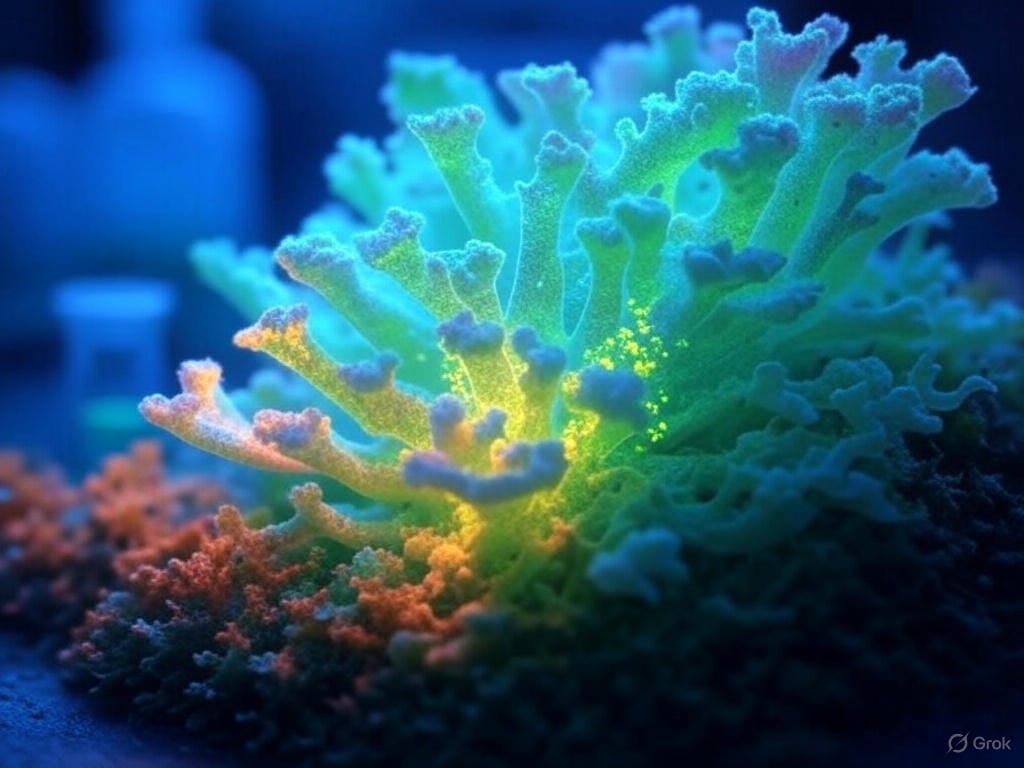
How Scientists Are Redesigning Nature’s Relationships to Combat Extinction and Pollution?
In a radical departure from traditional conservation, a new frontier in biology is emerging: synthetic symbiosis, where scientists engineer mutually beneficial relationships between species to address environmental collapse. Unlike rewilding or genetic modification, this approach focuses on creating entirely new ecological partnerships—think fungi that detoxify soil for endangered plants or bacteria that help coral survive acidifying oceans. Pioneered by labs in Sweden, Japan, and California, the field is gaining traction as a tool to combat biodiversity loss, pollution, and climate change.
The Science of Forced Friendship
Symbiosis—nature’s partnerships, like lichen (algae + fungi) or gut microbes aiding digestion—has existed for millennia. Synthetic symbiosis takes this further by designing cross-species collaborations that would never evolve naturally. Using CRISPR, AI-driven microbiome analysis, and environmental DNA (eDNA), researchers identify organisms with complementary traits and “matchmake” them to solve specific problems.
Case Study: The Plastic-Eating Lichen Project
In 2023, a team at the University of Zurich engineered a lichen by combining a phototrophic algae with a Ideonella sakaiensis bacterium (which breaks down PET plastic). The algae provides energy via photosynthesis, while the bacterium degrades microplastics in soil. Early trials show a 70% reduction in plastic waste in contaminated farmland within six months.
Applications Redefining Conservation
- Pollution Cleanup:
- Oil-Slurping Microbe Teams: Modified Pseudomonas bacteria work with methane-consuming archaea to break down oil spills 40% faster than conventional methods.
- Heavy Metal Moss: A UK project pairs moss with metal-absorbing fungi to detoxify mining sites.
- Climate Resilience:
- Heat-Resistant Coral Symbiotes: Researchers in Australia are injecting corals with heat-tolerant zooxanthellae (algae) and a biofilm-producing bacterium to shield them from bleaching.
- Drought-Proof Crops: A startup in Kenya engineers millet roots to host fungi that extract water from air humidity, boosting yields in arid regions.
- Invasive Species Control:
- Viral “Matchmakers”: In Hawaii, scientists deploy a benign virus to link invasive mongoose gut microbes with a protein that reduces fertility, curbing population growth.
Ethical Dilemmas and Risks
Critics argue that synthetic symbiosis could destabilize ecosystems:
- Unpredictable Chain Reactions: Engineered partnerships might outcompete native species or transfer genes horizontally.
- Ethics of “Playing Ecosystem Architect”: Who decides which species survive or vanish?
Dr. Linh Nguyen, a bioethicist at MIT, warns: “We’re not just altering species—we’re redesigning the rules of coexistence. The long-term consequences are a black box.”
The Next Frontier: Urban Symbiotic Networks
Cities are becoming testing grounds. In Singapore, rooftop gardens use ant-fungus teams to capture CO₂ and convert it into calcium carbonate, which strengthens building materials. Meanwhile, Berlin’s “Living Rivers” project introduces filter-feeding clams paired with toxin-neutralizing bacteria to purify polluted canals.
Why This Matters
Synthetic symbiosis challenges the notion that conservation is about “restoring” the past. Instead, it embraces adaptation, offering scalable solutions for a planet undergoing irreversible change. As one researcher quipped, “Evolution took 3 billion years to build partnerships. We don’t have that luxury anymore.”