Alright, let’s dive into a cosmic showdown that’s been brewing for centuries—Advaita Vedanta, the ancient Indian philosophy of non-dualism, pitted against the wild, cutting-edge theories of consciousness popping up in today’s science magazines. If you’ve ever wondered what makes you you, buckle up—this is going to stretch your mind further than a yoga pose after too much coffee!
Advaita Vedanta: The OG Consciousness Guru
Picture this: around 800 CE, Adi Shankaracharya rolls into town with Advaita Vedanta, a philosophy that says consciousness isn’t just in your head—it’s everything. The core idea? There’s no separation between you, me, the tree outside, or even that pesky neighbor’s dog. It’s all one big, blissful awareness called Brahman, the ultimate reality. Your individual self? Just a temporary mask—your ego’s little cosplay act—over this infinite consciousness. Meditation, self-inquiry, and a hefty dose of “you are not your thoughts” are the tools to peel back the layers and realize you’re part of this universal oneness. It’s deep, it’s poetic, and it’s been chilling with sages for over a millennium.
Modern Science: Consciousness Goes Quantum and Cellular
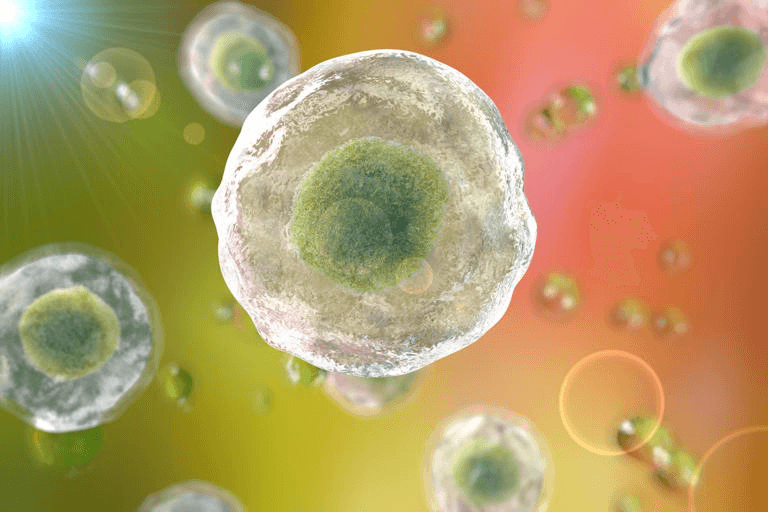
Fast forward to 2025, and science is throwing its hat into the ring with some mind-bending twists. Forget the brain being the sole consciousness HQ—researchers like William B. Miller are suggesting every one of your 37 trillion cells might be a tiny conscious player, rewriting Darwin’s rulebook. Imagine your skin cells gossiping about your latest snack! Then there’s the xenobot craze—lab-grown organisms that reshuffle their roles post-mortem, hinting that consciousness might kick in at the cellular level, not just the brain. It’s like your body’s a democracy of aware little voters!
And if that’s not wild enough, scientists like Michael Pravica are peering into the quantum realm, proposing that your brain might tap hidden dimensions during those “aha!” moments, generating consciousness through funky quantum vibes. A recent rat study with stabilized microtubules—those brain nanotubes—showed some staying awake longer under anesthesia, teasing a link between quantum trickery and awareness. Plus, psychedelics like psilocybin are getting a nod, with studies suggesting they’ve shaped human consciousness over generations and even dialed down death anxiety—talk about a trippy legacy!
The Showdown: Where They Align and Diverge
Here’s where it gets juicy. Both Advaita Vedanta and modern science agree consciousness might stretch beyond your skull. Vedanta’s Brahman echoes the idea of a universal awareness, while cellular and quantum theories hint at consciousness permeating matter itself. That’s a high-five across centuries! But here’s the split: Vedanta sees it as a spiritual unity, a oneness to awaken to through inner work, no lab coat required. Science, on the other hand, is all about measurable experiments—rats, xenobots, and psychedelic trips—trying to pin down consciousness like a butterfly in a jar.
Vedanta’s got no use for quantum equations or AI organisms—it’s about transcending the material world, not dissecting it. Meanwhile, science hasn’t caught up to Brahman’s poetic “all is one” vibe, sticking to testable hypotheses that sometimes feel like they’re chasing shadows. And while Vedanta promises liberation through realization, science is still debating if consciousness can reshape reality—though those microtubule studies and psychedelic insights are starting to flirt with that idea.
Who Wins This Cosmic Debate?
Honestly, it’s less a winner-takes-all and more a tag-team match. Advaita Vedanta offers a timeless, soul-soothing framework—perfect if you’re into chanting “Om” under a banyan tree. Modern science brings the geeky gadgets and bold experiments, pushing boundaries with every rat and robot. Maybe the real magic is blending them: Vedanta’s wisdom guiding science’s curiosity, or science’s data grounding Vedanta’s mysticism. Either way, consciousness—whether it’s Brahman or a quantum cell party—is proving it’s way bigger than we thought. What’s your take—ancient sage or lab geek? Share below, and let’s keep the mind-bending going!
Is Consciousness More Than Brain Activity? Some Scientists Think It Might Be Shaping Reality
For over a century, Popular Mechanics has brought you insights into the most fascinating feats of technology—from backyard inventions to battlefield machines. But in recent years, our focus has turned inward, toward perhaps the most complex system of all: the human mind.
Specifically, we’ve been exploring the mystery of consciousness—what it is, where it resides, and whether it might be more powerful than we ever imagined.
The Big Question: What Is Consciousness?
Once confined to philosophy and late-night college debates, the study of consciousness is now a serious field across neuroscience, quantum physics, biology, and even artificial intelligence. And with every new discovery, the mystery deepens.
We’ve asked mind-bending questions, such as:
- Can consciousness exist outside the brain?
- What happens to it after death?
- Could consciousness actually influence physical reality—not just our perception of it?
Let’s dive into these possibilities with an open mind, starting with a bold idea: maybe consciousness isn’t just in your head.
🧠 Are Your Cells Aware?
Does consciousness reside solely in the brain, or is it embedded throughout the entire body—even in our cells?
Dr. William B. Miller, a physician and evolutionary biologist, believes that every cell in our body may possess a degree of awareness. According to him, evolution may not be driven solely by genetic coding and natural selection, as Darwin proposed, but also by cellular intelligence.
Rather than being passive workers that follow genetic instructions, Miller and other researchers suggest that cells are autonomous agents capable of decision-making—hinting that life and consciousness might have emerged simultaneously.
Supporting this theory are fascinating developments like xenobots, AI-designed multicellular organisms that perform tasks beyond their biological programming. For instance, some use cilia (hairlike structures) for movement, repurposing functions usually used to transport mucus. This behavior has led scientists like Dr. Peter Noble and Dr. Alex Pozhitkov to propose a “third state” of life, where cells reorganize post-mortem into novel structures.
If true, this shifts the paradigm entirely: conscious cells, not full organisms, may be the fundamental building blocks of biological agency.
🧬 Does Consciousness Operate at the Quantum Level?
Beyond biology, researchers are also probing consciousness at the quantum level.
Some theorists propose that consciousness could emerge from quantum activities in the brain. Dr. Michael Pravica, a physicist, believes heightened awareness might allow the brain to tap into hidden dimensions. While the idea is controversial, it’s gaining attention in both scientific and philosophical circles.
A recent study took a more experimental approach. Rats were given anesthesia alongside molecules that stabilized “microtubules”—tiny structures inside neurons believed to operate in the quantum realm. The rats with stabilized microtubules stayed conscious longer, suggesting a potential link between these quantum processes and awareness itself.
Could this mean our brains are quantum engines of consciousness? It’s not yet conclusive—but it’s a question worth asking.

🍄 Can Psychedelics Expand Consciousness?
Psychedelics, often dismissed as mind-altering drugs, are now being studied seriously for their potential to enhance or alter consciousness.
At Johns Hopkins University, researchers found that users of substances like LSD or DMT reported powerful spiritual experiences, a sense of connection to a greater reality, and a reduced fear of death.
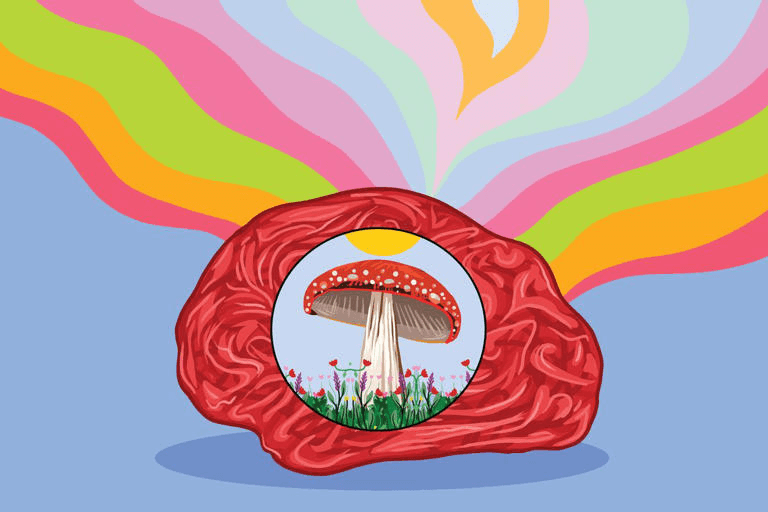
Even more astonishing: a review from the Miguel Lillo Foundation in Argentina suggests that psilocybin (from magic mushrooms) didn’t just affect individual perception—it may have played a role in the evolution of human consciousness over millennia.
Imagine that: a compound in nature not only expanding the mind, but shaping it across generations.
🔍 The Search for Consciousness Continues
The exploration of consciousness is just getting started. Some of the most compelling questions still lie ahead:
- Is consciousness an electromagnetic phenomenon?
- Would alien intelligence experience consciousness differently?
- Can we eventually merge our minds with machines?
Around the world, scientists are pushing the boundaries of what we know about consciousness—questioning its origins, functions, and limits. Whether it’s through quantum theory, cellular biology, AI, or psychedelics, one thing is clear: the more we learn, the more extraordinary the human mind appears to be.