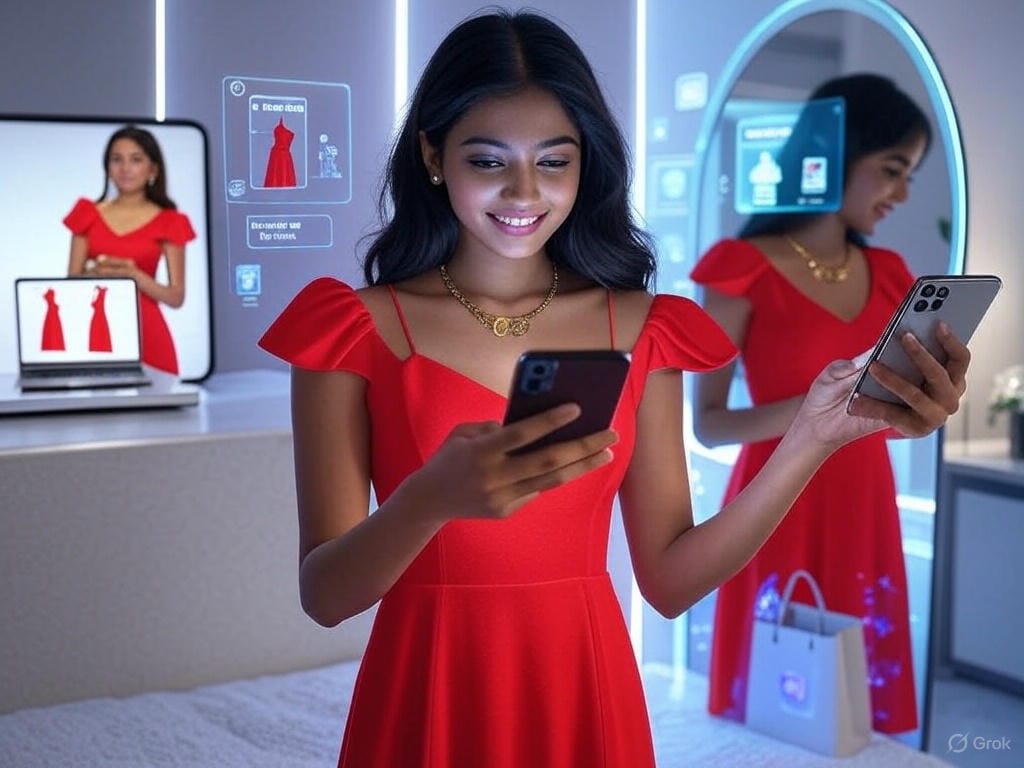
Imagine slipping into a designer dress or testing a bold new lipstick shade without leaving your couch. In 2025, virtual try-on technology is making this a reality, transforming how we shop for fashion online. Powered by artificial intelligence (AI), augmented reality (AR), and advanced imaging, virtual try-ons let you “wear” clothes, accessories, or makeup through your phone or computer, offering a personalized, immersive experience. With global e-commerce projected to reach $7 trillion by 2025, this tech is tackling sizing woes, reducing returns, and boosting customer confidence. This ultimate guide dives into how virtual try-on fashion works, its benefits, top platforms, and what to expect in 2025, optimized for keywords like “virtual try-on fashion 2025” and “AI fashion trends” to rank high on Google. Whether you’re a fashion enthusiast or an online shopper, here’s everything you need to know to stay ahead of the curve.
What is Virtual Try-On Technology?
Virtual try-on technology allows shoppers to visualize how clothing, accessories, or beauty products look on them using digital tools. By leveraging AI, AR, and 3D modeling, these platforms create realistic simulations based on your body measurements, skin tone, or facial features. In 2025, brands like Zara, Gucci, and L’Oréal are integrating virtual try-ons into their apps and websites, making online shopping feel like a trip to the fitting room.
Key features include:
- Real-Time Rendering: See clothes or makeup applied instantly via your device’s camera.
- Body Mapping: AI analyzes your measurements for accurate fit visualization.
- Customization: Adjust sizes, colors, or styles to match your preferences.
- Multi-Platform Access: Available on smartphones, tablets, and even smart mirrors in stores.
This technology is gaining traction as consumers demand seamless, interactive shopping experiences, with searches for “virtual try-on fashion” spiking in 2024, per Google Trends.
Why Virtual Try-On is a Game-Changer in 2025
The fashion industry is at a crossroads, with e-commerce sales soaring but returns costing retailers $600 billion annually due to sizing issues, according to a 2024 Statista report. Virtual try-ons address this by letting shoppers see how items fit before buying, reducing returns by up to 30%, as noted by McKinsey. Here’s why AI virtual try-on 2025 is trending:
- Enhanced Confidence: Shoppers can visualize fit and style, minimizing purchase hesitation.
- Sustainability: Fewer returns mean less packaging waste and lower carbon emissions.
- Global Reach: Brands can attract international customers with tailored digital experiences.
- Personalization: AI-driven recommendations suggest complementary items, boosting sales.
With 73% of shoppers expecting personalized experiences, per a 2024 Nielsen study, virtual try-ons are becoming a must-have for retailers aiming to stay competitive in 2025.
How Virtual Try-On Technology Works
Virtual try-on platforms combine cutting-edge technologies to create lifelike simulations:
- AI and Machine Learning: Algorithms analyze user data—body measurements, skin tone, or facial features—to generate accurate visualizations. AI also predicts fit based on garment specifications.
- Augmented Reality (AR): AR overlays digital clothing or makeup onto live camera feeds, allowing real-time interaction. For example, Snapchat’s AR filters power many beauty try-ons.
- 3D Modeling: High-resolution 3D models of garments ensure realistic textures, draping, and movement, as seen in platforms like Zara’s Virtual Try-On.
- Computer Vision: This tech maps your body or face, ensuring precise placement of virtual items, even as you move.
To use a virtual try-on, you typically:
- Open the brand’s app or website.
- Upload a photo or use your device’s camera.
- Input measurements or select a body model.
- Browse items and see them “worn” instantly.
In 2025, advancements in AI processing speed and AR realism are making these experiences smoother, with platforms like Gucci’s AR App offering near-photorealistic results.
Top Virtual Try-On Platforms to Watch in 2025
Several brands and tech companies are leading the charge in virtual try-on fashion 2025. Here are the top platforms to explore:
- Zara Virtual Try-On: Zara’s app uses AR to let you try on select clothing items, with 4K rendering for realistic textures. Available on iOS and Android, it’s free with a Zara account (Zara).
- Gucci Live Try-On: Gucci integrates virtual try-ons for shoes, bags, and sunglasses, using AI to match items to your style. It’s accessible via their website and app (Gucci).
- L’Oréal Paris Virtual Makeup: Perfect for beauty lovers, this platform lets you test lipsticks, eyeshadows, and foundations. Powered by ModiFace, it’s available on their site and Snapchat (L’Oréal).
- ASOS Virtual Fit: ASOS’s tool uses body scanning to recommend sizes and visualize fit, reducing returns. Free on their app (ASOS).
- Wannaby: A tech provider for brands like Farfetch, Wannaby’s platform supports virtual try-ons for clothes and accessories, with a focus on 3D accuracy (Wannaby).
These platforms are user-friendly, requiring only a smartphone or webcam, and most offer free access, making them ideal for testing before you buy.
Benefits of Virtual Try-On for Shoppers and Brands
For Shoppers:
- Accurate Sizing: See how clothes fit your body, reducing the guesswork of online shopping.
- Time-Saving: Try multiple items in minutes without visiting a store.
- Fun and Interactive: Enjoy a gamified shopping experience, especially with beauty try-ons.
- Informed Decisions: Compare styles and colors to find the perfect match.
For Brands:
- Higher Sales: Virtual try-ons increase conversion rates by 20%, per a 2024 Forbes report, as customers feel confident in purchases.
- Lower Returns: Accurate fit visualization cuts return rates, saving costs.
- Customer Loyalty: Personalized experiences foster repeat purchases and brand trust.
- Global Expansion: Reach international markets with digital tools that transcend physical stores.
In 2025, brands adopting virtual try-ons are seeing a competitive edge, with McKinsey predicting AI-driven tools could add $275 billion to fashion industry profits by 2030.
Challenges and Ethical Considerations
While virtual try-on technology is transformative, it’s not without hurdles:
- Accessibility: High-end devices or fast internet are needed for optimal performance, potentially excluding some users.
- Data Privacy: Collecting body measurements or facial data raises concerns. Brands must comply with laws like GDPR, as noted by The Guardian.
- Bias in AI: Algorithms may favor certain body types or skin tones, requiring diverse training data to ensure inclusivity.
- Cost for Brands: Developing AR platforms is expensive, with initial costs up to $1 million, per a 2024 Business of Fashion study.
Ethical debates also arise. Some X users question whether virtual try-ons promote overconsumption, with posts like, “Are we just buying more because it’s fun to try?” (X Post). Others praise the sustainability benefits, highlighting reduced returns (X Post).
How to Use Virtual Try-Ons Effectively
To make the most of virtual try-on apps, follow these tips:
- Provide Accurate Measurements: Input your height, weight, and body measurements for precise fit visualization.
- Use Good Lighting: Ensure your camera captures clear images for realistic rendering.
- Check Compatibility: Verify your device supports the app (most require iOS 14+ or Android 10+).
- Explore Options: Try different colors, sizes, or styles to compare looks.
- Read Reviews: Check user feedback on sizing accuracy before buying.
For beauty try-ons, test products in natural light to see true colors, and use apps like L’Oréal’s Virtual Makeup for shade matching.
What’s Next for Virtual Try-On in 2025?
In 2025, AI fashion trends are set to evolve rapidly:
- Smart Mirrors: In-store smart mirrors will offer virtual try-ons, blending physical and digital shopping, as seen in Farfetch’s Store of the Future.
- Social Media Integration: Platforms like Instagram will expand AR try-on filters, letting you shop directly from posts.
- AI Stylists: Virtual assistants will suggest outfits based on your wardrobe and trends, with ASOS testing this feature.
- Sustainability Focus: AI will optimize supply chains, reducing waste, as brands like H&M adopt virtual try-ons to cut returns.
These advancements promise a more seamless, eco-friendly shopping experience, with Forbes forecasting a 40% adoption rate among major retailers by 2026.
How to Get Involved
Ready to explore virtual try-on fashion? Here’s how:
- Download Apps: Try Zara, Gucci, or L’Oréal apps for free virtual try-ons.
- Share Feedback: Post your experience on X with #VirtualTryOn2025 to join the conversation.
- Support Sustainable Brands: Shop from retailers using AI to reduce waste, like ASOS.
- Stay Updated: Follow Vogue or Business of Fashion for the latest AI fashion news.
Conclusion: Embrace the Future of Fashion
Virtual try-on fashion 2025 is more than a trend—it’s a revolution in how we shop, blending technology with creativity to enhance the online experience. From reducing returns to empowering sustainable choices, AI-driven try-ons are reshaping the industry, offering shoppers confidence and brands a competitive edge. As platforms like Zara and Gucci lead the charge, 2025 promises a vibrant, accessible future for fashion. Dive in, try on that dream outfit, and share your thoughts—what’s your favorite virtual try-on feature? Let’s shape the future of fashion together!